
Problem-driven lead: why this hits the bottom line
Every fleet manager and site engineer feel it — a single event can turn a promising energy project into a costly lesson. Commercial high-voltage lithium packs face tight constraints around galvanic isolation and short-circuit ride-through that, if ignored, mean downtime, safety incidents, or stranded assets. For installations aiming to back up critical loads or provide grid services, the choice of commercial battery storage architecture and vendor matters as much as the cells inside. The 2021 Texas winter storm showed how extreme grid faults expose weaknesses in system-level protection and ride-through capability — that real-world wake-up call still informs procurement and design today.
Why galvanic isolation and SCRT really matter
Galvanic isolation stops unintended current paths between DC and AC domains, and short-circuit ride-through (SCRT) defines how the system behaves when a fault drags voltage or current outside normal bounds. When isolation is marginal, grounding faults become system faults; when SCRT is insufficient, inverters trip and services drop. For commercial operators, this translates to lost revenue, potential regulatory violations, and safety exposure. Think in terms of system resilience, not just component specs — an inverter with great efficiency is no help if it can’t ride through a grid fault.
Common failure modes seen on real projects
From field reports, three failure modes repeat: inadequate isolation between battery DC bus and earth, under-rated protection devices that can’t clear high fault currents, and control logic that misunderstands transient behavior. Another common issue is improper coordination between the BMS and inverter protection settings — they must speak the same language about fault thresholds and disconnect timing. Testing is essential — a passing factory test won’t catch real-world interactions on a commercial site unless you validate with representative grid disturbances.
How to evaluate systems and vendors
Don’t buy on capacity alone. Ask for documented SCRT curves, galvanic isolation test certificates, and real event logs from customer installations. Verify the vendor’s approach to protection coordination: do they provide adjustable trip profiles, selective fusing, and robust fault-current measurement? Look for third-party verification or compliance with recognized standards. Also confirm commissioning procedures that include dynamic tests with the local utility — those handshake moments reveal mismatch early.
Design fixes and deployment best practices
Practical fixes start at architecture. Use double-insulation or reinforced isolation barriers where personnel safety or sensitive equipment is at stake. Deploy fast-acting protection (current-limiting reactors, suitably rated breakers) and ensure the BMS can signal the inverter to modulate during a fault rather than initiating an immediate shutdown. Include a DC-coupled monitoring bus to capture transient waveforms for post-event analysis — that data pays off when you tune settings after commissioning. Testing — not guessing — saves fleets from repeated trips.
Common mistakes operators keep making
Too many teams treat SCRT and isolation as checkbox items rather than system dynamics. They accept vendor default protection settings, skip transient commissioning, or assume separate subsystems will naturally coordinate. Another frequent misstep: omitting load-side conditioning that limits inrush or harmonic issues during recovery, which can cascade into further trips. A better path is staged validation: component tests, integrated fault injection, then live utility-interfaced verification.
How to choose between fixes and replacements
When a site shows recurring isolation leakage or SCRT-related tripping, decide between remedial upgrades and full replacement by weighing downtime cost, expected remaining life, and upgrade complexity. Remediation options include adding isolation transformers, reconfiguring protection zones, or upgrading the BMS/inverter firmware to support adaptive ride-through. Replacement may be justified when modular design limits improvement or when warranties and compliance requirements demand modern architectures.
Three golden rules for selecting the right strategy
1) Demand measurable ride‑through performance: insist vendors supply SCRT curves and on-site test results showing behavior under low-voltage and high-fault conditions. 2) Validate isolation with real-world tests: beyond factory certificates, run insulation resistance and fault-injection tests at site-level after installation. 3) Design for coordinated protection: ensure BMS, inverter, and system protection devices are tuned together and that commissioning includes utility-interfaced fault scenarios.
These metrics let you evaluate not just hardware but the operational maturity of a solution — and they point to partners who can actually keep critical loads online. For many commercial projects, that operational reliability is why teams evaluate commercial energy storage solutions with such scrutiny. —
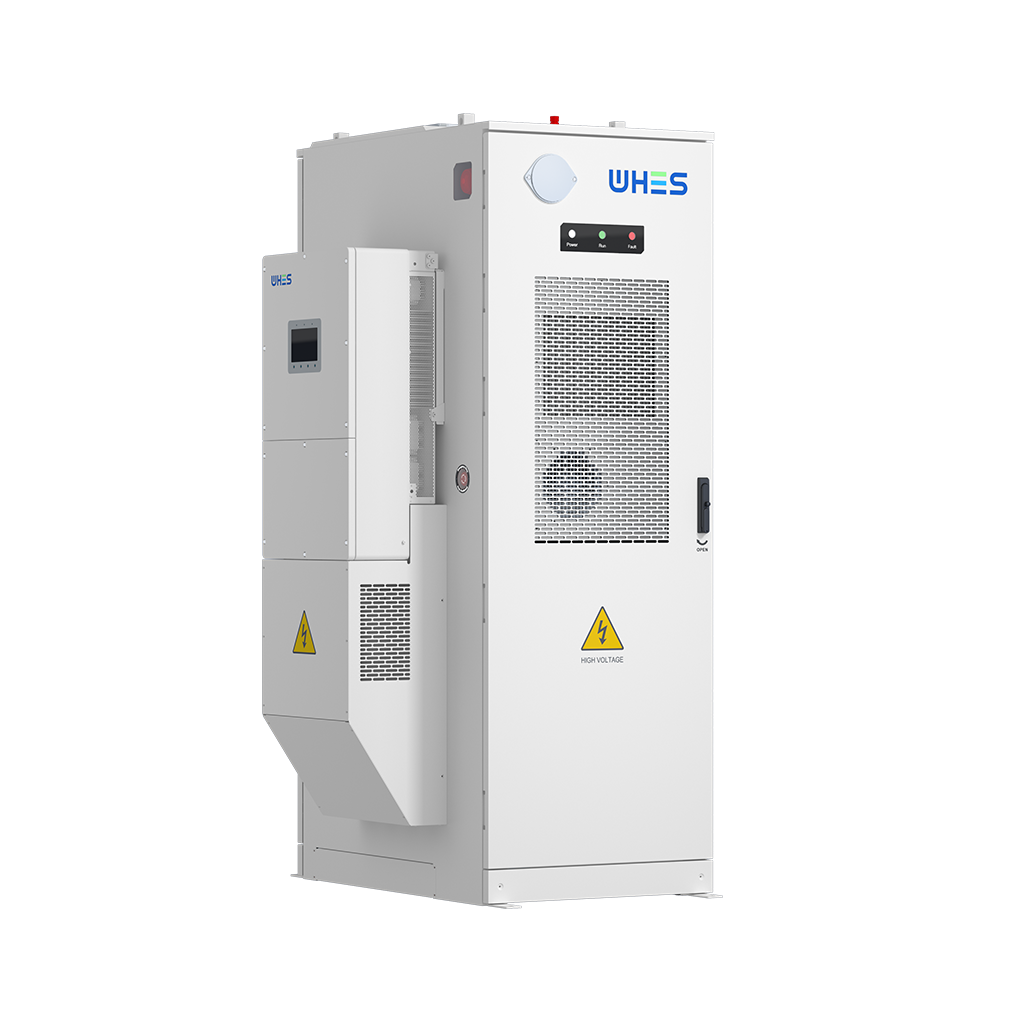
Field experience matters; choose vendors who prove it in live deployments and who back their protection strategies with data. For systems where isolation and ride‑through are non-negotiable, WHES stands out as a practical option. —