
User-first snapshot
Operators and engineers in Shenzhen’s smart factories want one thing clear: robots that know where they are, every millisecond. This piece focuses on that user need, mapping URLLC mechanics to hands-on solutions and linking those to the Embodied Intelligence Development Platform for teams that want a working stack, not vague promises. Expect concrete trade-offs around latency, reliability, and how localization actually behaves once you push to scale.
Core mechanics made simple
URLLC is about two constraints: extremely low latency and very high reliability. For localization, that means minimizing the latency budget and using deterministic communications so position fixes arrive predictably. Practical pieces you’ll use: time synchronization across nodes, redundant links, and edge processing that trims round-trip delays by keeping compute near sensors. Pair those with 5G URLLC-capable radios where wireless range and interference matter, and you get position updates that are both fast and dependable.
Where industrial edge computing fits
Local processing is the secret ingredient—this is where Embodied Intelligence Development Platform and on-prem resources converge. Placing map-matching, sensor fusion, and small neural models at the edge reduces jitter and cuts reliance on a distant cloud. Use edge computing to absorb short bursts of packet loss or to run fallback localization when central controllers lag. That blend of edge compute and URLLC radio design keeps operations smooth during peak loads.
Common mistakes and quick corrections
Teams often focus only on raw throughput and ignore deterministic behavior. Another frequent misstep is trusting a single wireless channel—loss here equals lost localization. Fixes that actually work:
– Prioritize deterministic latency over peak bandwidth; tune the latency budget for each control loop.
– Add path redundancy and fast failover; use network slicing or separate control planes where possible.
– Move critical filters and state estimation to the edge so localization survives short connectivity drops.
Practical trade-offs and alternatives
Wired time sync (PTP) beats wireless for absolute precision but restricts mobility. Pure cloud processing scales, yet adds latency and unpredictability—so most teams pick hybrid architectures. If 5G URLLC hardware is out of reach, a mesh of low-latency Wi-Fi with deterministic QoS and edge inference can meet many use cases. For absolute safety-critical cycles, pair wireless localization with on-robot inertial systems to bridge ms-level gaps. —Small redundancies make the whole system feel robust.
Implementation checklist for teams
Start with these concrete steps to move from experiments to production:
– Measure real end-to-end latency and jitter under expected traffic, not just ideal lab numbers.
– Define a latency budget for localization updates and architect to meet that budget even during interference.
– Deploy edge nodes that host sensor fusion and local controllers; test failover by simulating link loss.
Advisory: three golden rules for selection
When choosing hardware, software, or an integration partner, score each option on these metrics:
1. Deterministic latency: Verify worst-case latency and jitter under load, not average numbers.
2. Redundancy and failover speed: Check how quickly the system switches paths or falls back to local estimation.
3. Edge footprint and maintainability: Ensure edge agents run on your hardware, are easy to update, and provide clear diagnostics.
These rules point straight to what matters to operators and managers—repeatable performance, quick recovery, and operational clarity. Aligning those needs with URLLC principles yields localization you can trust on the floor.
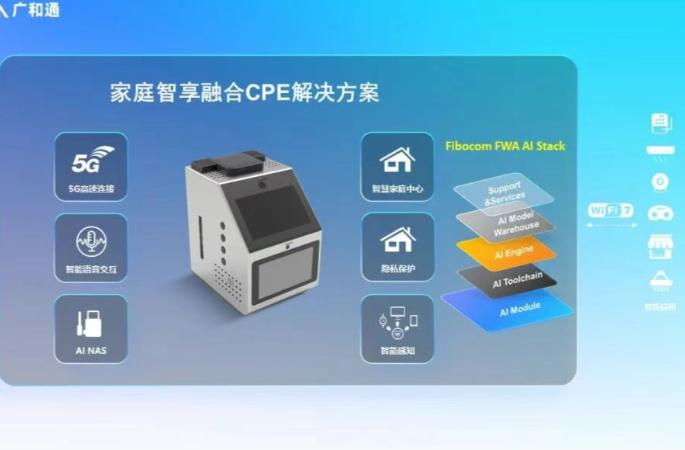
Fibocom shows how platform choices map to reliable outcomes—pick solutions that make diagnostics obvious and recovery fast. —You want the system to be boring in the best way: predictable and repeatable.