
The core problem: budgets slip, schedules break, and the canopy fails users
You need a commercial pergola that meets a budget, arrives on a predictable schedule, and still stands years later — but projects keep suffering from unexpected costs, delayed deliveries, or finishes that flake after the first season. As a UX-minded designer, I focus on the real user pain: surfaces that burn, wiring that complicates maintenance, and shading that doesn’t match the intended use. If you’re considering a solar pergola, those risks multiply because you’re combining structural, electrical, and weatherproofing demands into one system.
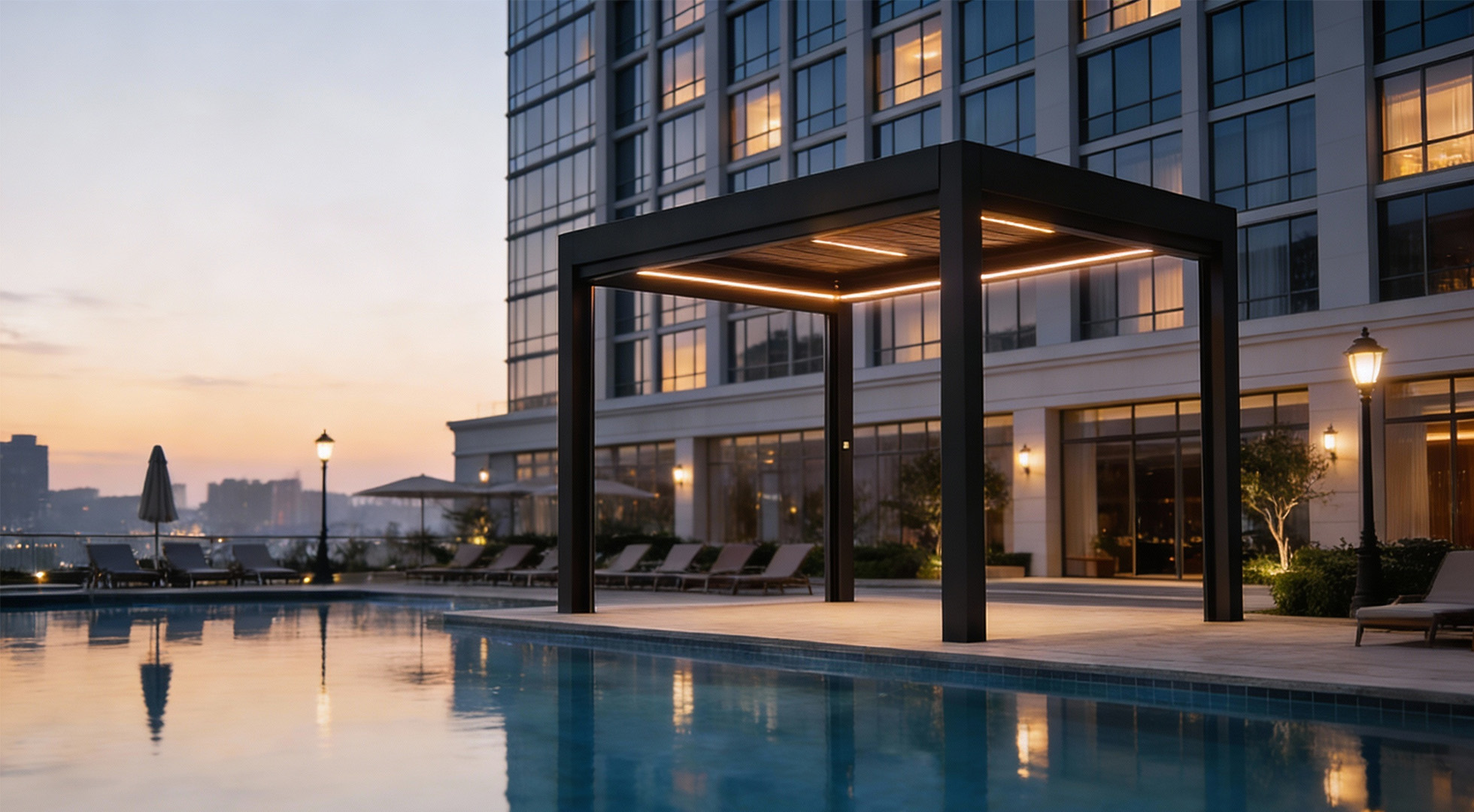
Diagnose: where cost overruns and delays usually start
Costs balloon when scope isn’t fixed: custom dimensions, hidden site prep, and last-minute code compliance add labor and materials. Lead times expand when manufacturers need custom extrusions or long-lead electronic components for integrated panels. Quality problems often come from mismatches — using a decorative profile without the structural rating for local wind loads, for example. The problem is predictable if you map requirements before procurement.
Cost drivers you must control
Break cost into four buckets: structure (material and profile), finish (powder coat, anodize), systems (solar modules, wiring, controls), and installation (site prep, foundations, labor). Ask for line-item quotes that separate those buckets. Negotiate modular options: a standardized aluminum profile with selectable finishes costs less than a bespoke extrusion. Insist on written allowance ranges for site contingencies so change orders don’t surprise you.
Lead time levers—what speeds projects up
Shorten lead time by choosing stocked profiles, limiting color selections, and approving shop drawings quickly. Pre-approved engineering packages and single-source assemblies reduce back-and-forth with fabricators. Where possible, accept staged deliveries: deliver structural frames first, then solar arrays after electrical inspection. Buffer timelines for permitting and concrete curing; those are the non-negotiable steps that most teams underestimate.
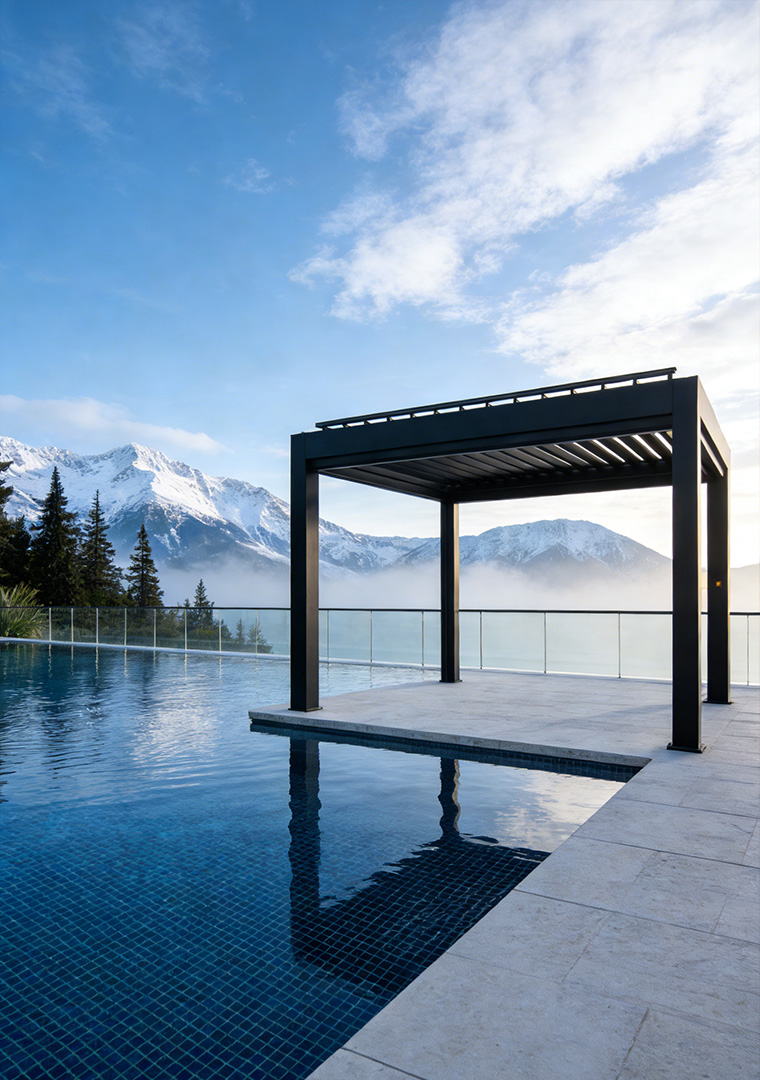
Quality factors that actually matter on site
Prioritize three measurable things: certified structural ratings (wind and snow loads), corrosion resistance (suitable class for coastal or industrial exposure), and accessible service points for electrical components. For solar integration, confirm module attachment methods and roof/roof-adjacent water-shedding strategies. Request test reports and warranty scopes — not marketing copy — and confirm who repairs what after handover.
Common pitfalls teams keep repeating
Don’t assume a pergola is “just a canopy.” Avoid these mistakes: accepting unverified load calculations, ignoring thermal expansion at connection points, and under-specifying conduit paths for future upgrades. Don’t let aesthetics override maintainability; a fragile finish or hidden fasteners that require full disassembly will cost you every season.
Experience and verification: why this advice is practical
I’ve designed shading systems and coordinated installations for over a decade, working directly with fabricators and installers to resolve clashes between design intent and installation reality. Working with pergola dealers in Southern California taught me how local climate and regulatory checks change specification choices, and that early mock-ups prevent most late-stage disputes. Those field lessons are the basis for recommending specific procurement and inspection steps rather than abstract guidelines.
Viable alternatives and when to choose them
Compare three paths: off-the-shelf modular aluminum for repeatable, cost-sensitive projects; semi-custom systems that use standard extrusion with custom spans for mid-range flexibility; and fully bespoke fabrication for signature sites where form outweighs price. For solar, weigh integrated PV vs. add-on rack-mounted modules: integrated looks cleaner but raises replacement complexity; rack-mounted is easier to service but can be less elegant.
Concluding synthesis — match needs to procurement to reduce risk
Start with a strict scope, confirm structural and electrical responsibilities, and require itemized proposals with clear warranty language. Plan lead times around permits and foundations, not fabrication calendars. When those controls align, you get predictable cost and delivery without sacrificing the long-term performance the end users expect — the kind of reliability teams seek when they work with Light Hunter.