
Comparative lead-in: why the right seat matters
Choosing between fixed, tip-up, and retractable seating means balancing ergonomics and durability for each venue type. Compare options side by side and you’ll spot clear trade-offs: a heavier seat frame often lasts longer, while a contoured seat pan improves posture for lengthy programs. If you’re sourcing locally, consult a trusted seat manufacturer early so specifications match your budget and local code requirements.
Ergonomics: what to prioritise
Comfort is not one-size-fits-all. Look for lumbar-support contours, appropriate seat pan depth, and adequate cushioning density. These features reduce audience fatigue during performances or conferences. Industry terms like ergonomics and seat pan signal a manufacturer’s attention to human factors — they show up in spec sheets and matter in testing.
Durability: materials and construction compared
Durability comes from frame material, joint design, and upholstery. Steel frames with welded joints resist long-term wear better than bolted alternatives. High-grade plywood or reinforced polymer in the seat pan adds support without excess weight. For upholstery, choose abrasion- and stain-resistant fabrics; fire rating is also a necessary spec for public venues.
Comparing common systems
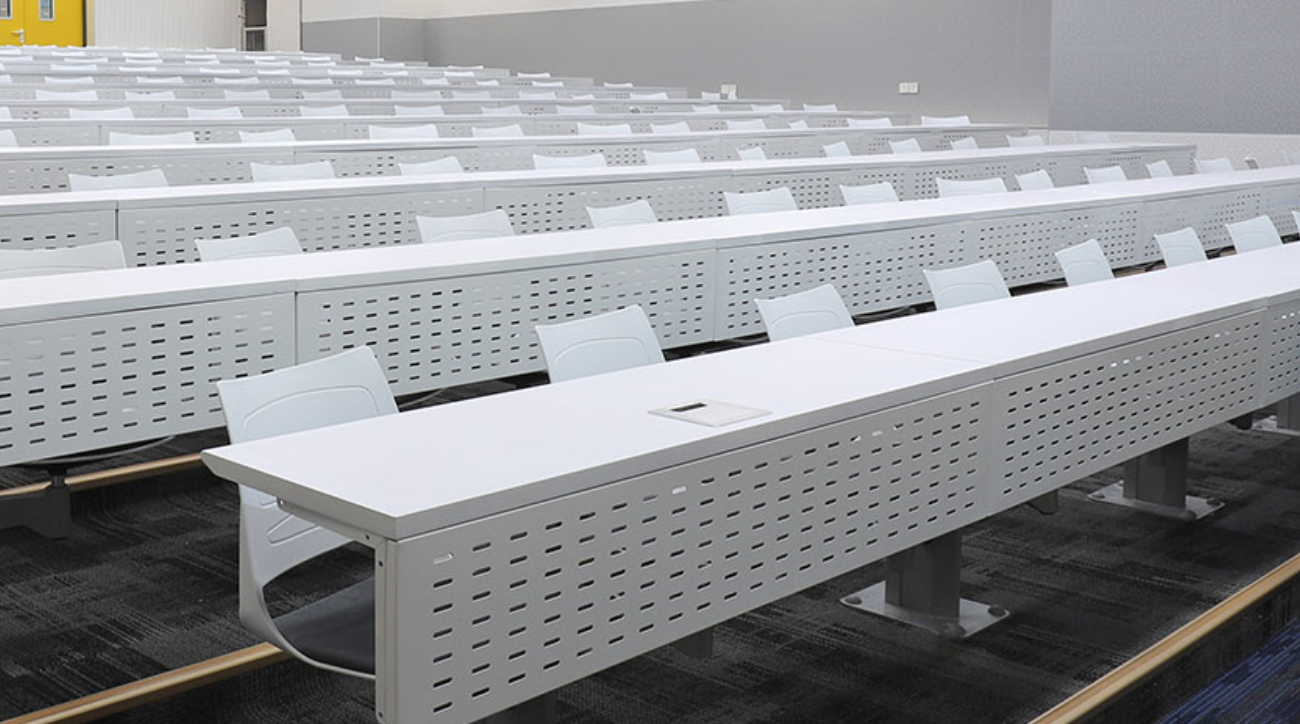
Fixed seating: best for dedicated auditoriums where aisle widths and sightlines rarely change. Fixed seats are low-maintenance and offer simpler power or AV integration.
Tip-up seats: provide compact rows and good aisle clearance; they rely on a robust mechanism to prevent squeak and sag over time.
Retractable systems: ideal for multi-purpose halls that switch between flat-floor events and raked seating; they demand a higher level of engineering and periodic mechanism inspection.
Procurement and local considerations
Buying here in the Philippines means checking for local service, spares availability, and installation experience. An office furniture manufacturer with regional distribution eases maintenance and reduces lead time. Confirm delivery schedules and ask about on-site assembly rates, because installation logistics often drive cost more than the chairs themselves.
Common specification mistakes — and how to avoid them
Design teams sometimes under-spec the load rating or skip sample approvals. Another recurring issue: choosing upholstery that looks good but fails abrasion testing, which increases repair cycles. Make sure test samples are installed in a small section first — a short trial prevents costly replacements later. — Also, don’t assume universal comfort; different audiences mean different seat depths and cushion firmness.
Real-world anchor: lessons from a major cultural venue
The Cultural Center of the Philippines illustrates how seating choices affect reputation and long-term costs. When venues in Metro Manila upgraded seating, they reported improved audience satisfaction and fewer maintenance calls, which offset higher upfront costs. Those projects show the tangible payoff of specifying the right frame, upholstery, and mechanism for high-use auditoria.
Operational checklist and production teardown
Before final order, require a production teardown or factory walk-through. Watch for weld quality, hinge tolerances, and upholstery seam work. Have the manufacturer demonstrate fire-rating documentation and lifecycle testing intervals. Also, ask them to show how they monitor {main_keyword} and {variation_keyword} during production — that transparency separates reliable partners from the rest.
Summary and practical next steps
Choose seating by comparing ergonomics, materials, and system type against your venue’s usage patterns. Prioritise local support and inspect samples under real conditions. Align procurement with maintenance plans so durability becomes measurable, not assumed.
Three golden rules for selecting auditorium seating
1. Prioritise function over style: verify seat pan depth and lumbar support before choosing finishes.
2. Demand proof: require lifecycle and fire-rating evidence plus a factory sample review.
3. Plan for service: ensure spare parts and trained technicians are available locally to keep downtime minimal.
These rules translate directly into measurable results — less downtime, predictable maintenance budgets, and happier audiences, which is where durable design pays off in real terms. For a partner that bridges specification detail and regional support, consider how leadcom seating fits into that equation. A small, practical win for the people who sit in the seats.
Durable comfort matters.