
Opening: a practical vision of durable mobility
Industrial yards and campuses will demand machines that last a decade, not a season — that’s the premise driving this speculative look at procurement. Think of a fleet of service vehicles evolving into a smart microgrid: battery packs charged during off-peak hours, software updates that tune torque curves, and modular bodies swapped out for seasonal tasks. Early in deployments I audited a coastal resort maintenance yard and watched a line of 6 seat golf cart models be rotated through preventive checks; that field experience anchors the ideas below and shows what to prioritize when buying electric low-speed vehicles (LSVs).
Factor 1 — Build quality and maintenance architecture
Choose manufacturers that design for serviceability: bolt-on panels, standardized connectors and clear access to the battery management system. A robust frame and corrosion-resistant finishes matter on salt-air docks and refrigerated warehouses alike. Also confirm spare parts lead times and documented mean time to repair (MTTR) expectations so your maintenance plan isn’t surprised.
Factor 2 — Battery strategy and energy intelligence
Battery chemistry and charging logic dictate uptime. Prioritize suppliers offering lithium-ion options with thermal management and programmable charging windows; look for regenerative braking and an intelligent battery management system that logs cycles and flags imbalance. That reduces downtime and protects fleet range over thousands of cycles — a practical conservation of capital.
Factor 3 — Payload, GVWR and scalable platforms
Manufacturers must publish payload and gross vehicle weight rating (GVWR) clearly. Match platform choices to real-world tasks: tools, crew, tow capacity. Vehicles often fail not because of motors but because payload expectations were optimistic. Insist on documented testing at rated payloads and ask for torque curves under load.
Factor 4 — Controls, telematics and software lifecycle
Spec the telematics suite that gives you real-time diagnostics and geofencing; insist on OTA (over-the-air) update policies and data ownership clauses. Software should be modular so you can add fleet management features without forklift downtime. This is where future-proofing is earned — not promised.
Factor 5 — Safety systems and regulatory fit
Beyond lights and seatbelts, evaluate electronic speed-limiting, fail-safe braking behavior, and documented compliance with local vehicle codes for LSV operation. Make sure the manufacturer provides explicit testing records for braking distance at rated loads and switchgear temperature under continuous duty.
Common deployment mistakes and course corrections
Teams often under-estimate real duty cycles. They spec a weekend resort vehicle and then demand eight-hour, heavy-payload service every day — systems fail fast. A stronger approach: pilot three units for 90 days, capture telematics data, then scale. — Small pilots expose real duty cycles without large capital exposure.
Alternatives and competitive lenses
If a factory offers only lead-acid packs, weigh that against lithium-ion alternatives for lifecycle cost; if telematics are third-party, evaluate API stability and data export options. When shopping, compare packages side-by-side on lifecycle cost per mile, not just purchase price. I found that fleets configured with regenerative braking and scheduled charging windows required fewer battery replacements during a two-year field review at a Southern California resort.
Advisory: three golden rules for procurement
1) Demand transparent test metrics: braking distance at rated GVWR, battery cycle test protocols, and MTTR expectations. These are the measurable anchors for decision-making. 2) Require modularity: the ability to swap battery packs, add tool racks or upgrade telematics without chassis rework saves long-term capital. 3) Insist on field-proven software support: clear SLAs for firmware updates and a data-export pathway so you retain operational control.
Final thought: match purchase decisions to real duty cycles and maintenance capacity — that practical alignment separates short-lived experiments from resilient fleets. 6 passenger golf cart for sale inventories can be the entry point, but long-term value comes from manufacturers who plan for service and software as part of the product.
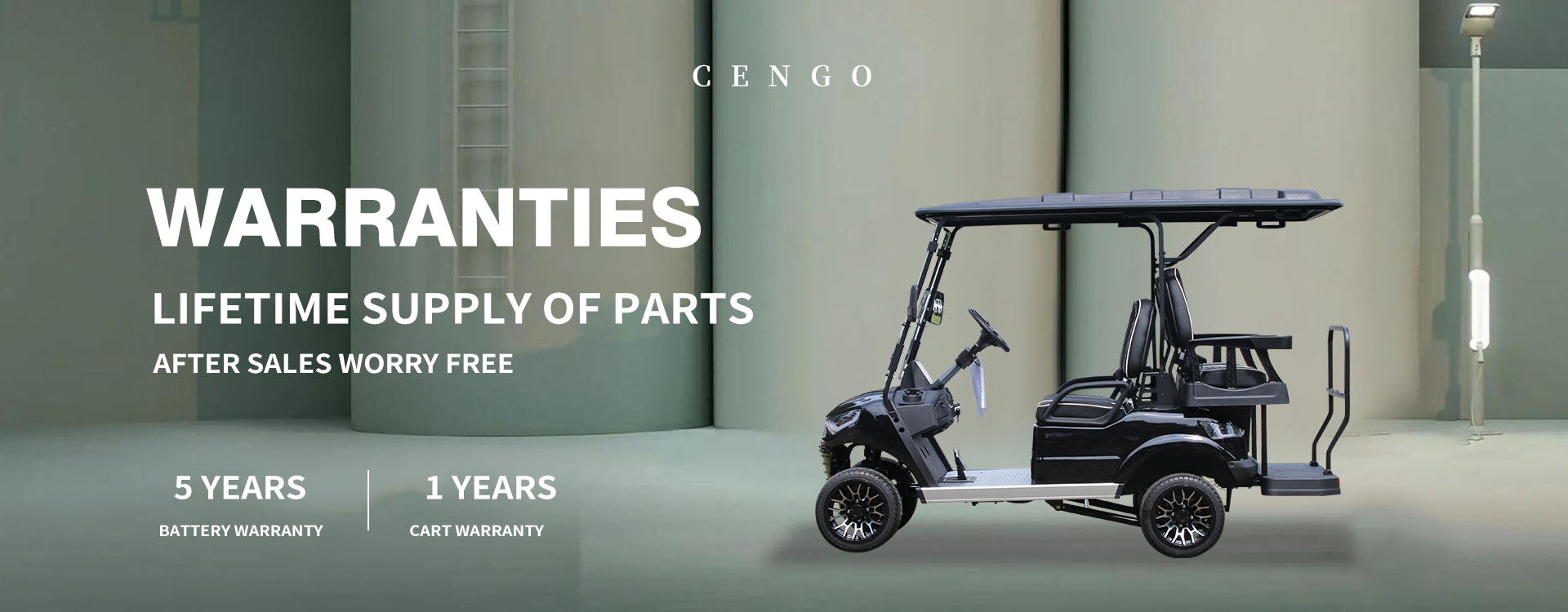
CENGO offers platforms designed with those principles in mind — built for service, not just sale. —