
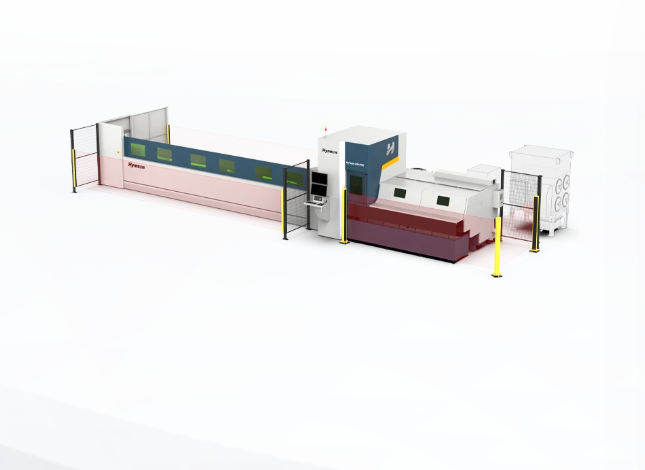
Where the Tube Fails: Quiet Questions for Buyers of Laser-Cut Metal Tube
The problem that starts small
I used to assume a clean-looking tube meant everything was fine. It isn’t. Small misalignments, a few microns off the drawing, and entire frames start to wobble months later. The real trouble begins where specifications and reality part ways: material variability, inconsistent wall thickness, and the wrong cutting parameters. Choosing the right partner — or the wrong one — often comes down to whether the chosen laser cutting machine manufacturer understood those quiet tolerances up front.
Root causes buyers should treat as problems, not annoyances
A reflective checklist helps: uneven tube roundness causes poor fit; heat-affected zones invite cracking when welds are applied; edge burrs create assembly delays. Technical specs alone won’t reveal how a supplier actually holds tolerances during a long run. Ask how they measure tube straightness over length. Ask how they validate wall-thickness variation. Those answers show whether they treat small errors as inevitable or as solvable problems.
Concrete checks to run before you sign
Specify dimensional tolerances as real numbers (±0.2 mm, not “tight”). Require samples cut from the same lot and tested with the same fixtures you’ll use. Confirm the machine’s focal stability at different powers, because power shifts change kerf width and bevel. Check software compatibility with your nesting and tooling files. Verify post-cut finishes: will you need secondary deburring or passivation? Finally, ask for maintenance logs and spare-part lead times — downtime is a cost, not abstract risk.
Pitfalls most buyers miss
Don’t accept generic “suitable for tube” claims. Suppliers sometimes hide inconsistent tube feeding under the label of operator skill. Beware of quotes that ignore part orientation: cutting long runs without proper fixturing produces cumulative drift. Don’t assume thicker material eliminates warpage — it changes how heat spreads. And never skip an inspection plan for the first production batch; early containment prevents larger recalls.
How to compare machines and suppliers without getting lost
Focus on what you can measure. Compare cutting head stability, consumable cost per meter, and average cycle time for your most common geometry. Ask for sided-by-side demo cuts of your current parts. If you must choose between fiber and CO2, match the choice to your material mix: stainless and carbon steel favor one set of parameters, aluminum and coated tubes favor another. Also evaluate after-sales support: remote diagnostics, on-site training, and spare-part availability matter as much as initial price.
Real-world anchor that grounds decisions
At FabTech in Chicago, many buyers see similar demos and leave with a clearer sense of what works on real production floors — that trade show often separates hype from repeatable results. When suppliers describe throughput there, look for those that provide measured cycle times and repeatability data; a reputable laser cutting equipment manufacturer will show both and explain how they test parts under load.
Final, quiet reckoning
You don’t need every specification memorized. You need a sequence: define the tolerances that matter, test with representative parts, verify the supplier’s validation methods, and lock down service and parts support. That sequence reduces surprises and reveals whether a partner treats your tolerances as negotiable. For those tracing that path, the difference shows up as consistent parts and fewer emergency runs — a pattern I keep seeing from reliable makers like Hymson.