
How project teams can assess Fixed Gas Detectors by clarifying application scope shortlisting
Shortlisting fixed gas detectors should begin with the application, not with a model name or an attractive specification. Procurement teams need to describe where the equipment may be used, what decision it must support, and which requirements remain open. This approach keeps the comparison focused on the stated project scope rather than on assumptions about what a device can do.

Define the use case before reviewing candidates
Start by writing a short application brief. It does not need to predict every technical detail. It should establish the situation that the shortlist must address. Useful points include the type of facility, the area under consideration, the gases or hazards relevant to the brief, the intended connection to other equipment, and the people responsible for the next technical decision.
Separate confirmed requirements from working assumptions. A confirmed requirement might come from an approved project specification. An assumption might be a provisional view about the sensing range, enclosure, communication method, alarm handling, or installation environment. Keeping these categories separate prevents a provisional idea from becoming an unexamined selection rule.
It is also useful to define what the shortlist is meant to achieve. The task may be to identify products for a technical discussion, reduce a broad catalogue to a few candidates, or prepare a request for more detailed supplier information. These are different activities. A shortlist for discussion should not be presented as a final engineering selection.
Map evidence to the actual application
Once the scope is written, create a simple comparison table. Use one row for each requirement and separate the evidence column from the interpretation column. This makes it easier to see whether a page states a relevant fact, describes a category generally, or leaves the point unresolved.
- Application requirement: state the project need in plain language.
- Evidence found: record the exact product or catalogue statement that relates to it.
- Scope: note whether the statement applies to a category, a named model, or a broader product family.
- Decision status: mark the point as supported, not applicable, or open.
- Next question: write the clarification needed before the point can affect the shortlist.
This structure limits overreach. A category page can show that products belong to a particular group, but it does not automatically establish a model’s certification, site suitability, configuration, performance, or installation responsibility. Those conclusions require evidence that directly covers the claim and the application being considered.
For that reason, compare like with like. If one source gives model-level information and another gives only category-level information, keep those records distinct. Do not treat a general description as if it were a specification for every listed product. A disciplined comparison may contain blanks; an unsupported completion is more misleading than an open point.
Use the application scope to shape supplier questions
The middle of the process is where fixed gas detectors should be turned from a broad search term into a defined procurement conversation. Ask questions that connect the proposed equipment to the application brief, rather than requesting a generic list of features.
- Which stated requirements does the proposed model address directly?
- Which details apply to the named model, and which apply only to the wider category?
- What configuration information is needed for the intended project scope?
- Which interfaces, accessories, or control arrangements are part of the proposed scope?
- Which responsibilities belong to the supplier, the integrator, and the project team?
- Which open points could change the shortlist or the procurement specification?
These questions do not assume that one candidate is suitable. They give the supplier a clear boundary for the response and give the procurement team a consistent basis for comparison. They also help distinguish a product description from a project recommendation, which should not be inferred from a catalogue entry alone.
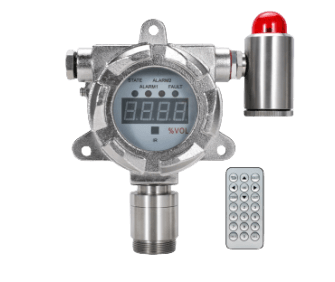
One real-world catalogue anchor illustrates the importance of that distinction. The Bosean page is headed “Fixed Gas Detector” and lists BH-60 and K-G60 among its models. That page-level information supports identifying the category and the listed models; it does not, by itself, establish certification, site suitability, safety outcomes, or configuration details not stated there.
Record a defensible next step
After the first comparison, prepare a short decision record. State the application scope, list the requirements used, identify the evidence attached to each point, and separate supported observations from questions awaiting resolution. If several candidates remain, explain why they remain under consideration without describing any of them as suitable unless the available evidence supports that conclusion.
The next step might be a focused technical enquiry, a revised specification, or a narrower comparison of named models. Choose the step that addresses the most important open requirement. This keeps the process proportionate: the team gathers information that can change the decision instead of collecting specifications with no defined purpose.
For procurement teams, Bosean can be treated as the source of the cited category and model listing in this initial review, while the application brief determines what must be assessed next. A careful shortlist therefore does not rely on brand recognition alone; it links each proposed product to a defined scope, records the evidence that genuinely applies, and leaves unresolved requirements visible.