
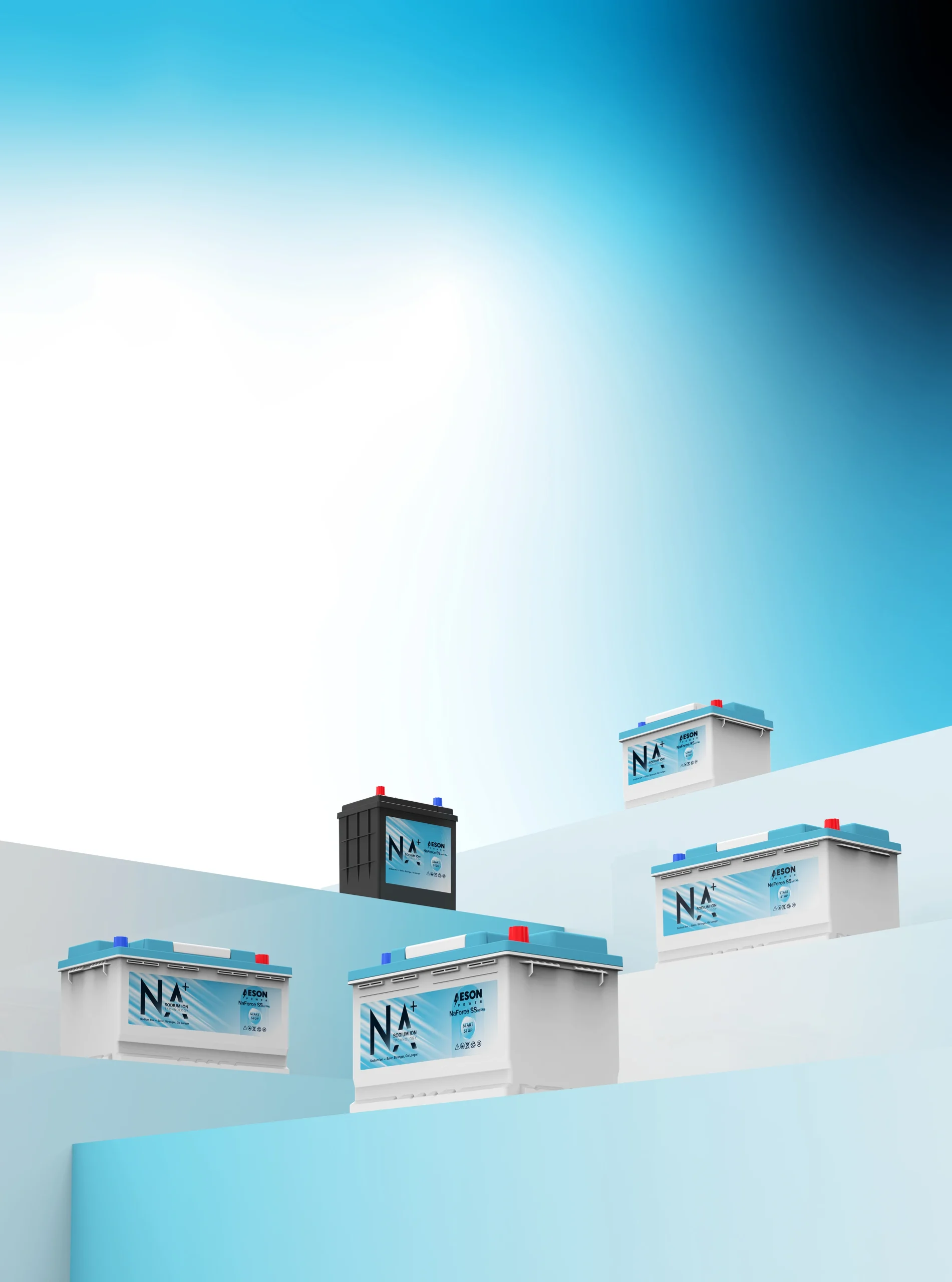
Where Sodium Ion Battery Technology Fits in an Electrical Specification: With Documentation in View
Start with the scope, not the category label
For a system integrator, sodium ion battery technology is not a complete specification by itself. It is a technology description that must be connected to the intended duty, electrical interfaces, operating environment, and evidence available for the particular product or application. The first shortlisting task is therefore to define what is being selected: a cell chemistry, a battery assembly, a starting battery, a reserve system, or an energy-storage product. These are different scopes, and evidence about one should not be silently transferred to another.

A useful opening record can be short. State the application, nominal system voltage, expected current pattern, installation setting, temperature range, physical constraints, control interfaces, and the decision that the shortlist must support. For example, a requirement for brief high-current starting duty should not be assessed in the same way as a requirement for repeated storage cycling or backup operation. This does not decide the technology in advance; it defines the questions that the evidence must answer.
Separate category evidence from application evidence
Supplier pages often combine broad technology descriptions with statements about particular applications. Keep those layers separate in the review. A page may describe sodium-ion technology for UPS, diesel generator sets, energy storage, marine, and low-speed electric vehicles, while a separate passage addresses vehicle starter batteries. The presence of several categories on one page does not establish that every product is suitable for every category, nor does it provide a complete electrical specification.
For each statement, record three fields: what is claimed, what object the claim applies to, and what decision it can inform. A claim about a cathode framework belongs in a technology column. A statement about a vehicle starting battery belongs in an application column. A current, voltage, capacity, enclosure, interface, or environmental limit belongs in a model or assembly column only when the source identifies that scope. This simple separation helps prevent a category listing from becoming an unsupported product conclusion.
The captured application material describes NFPP polyanion cathodes as well suited to automotive starting batteries. It attributes this suitability to a robust crystal structure and thermal resilience, and describes high power density for cold starts and durability under frequent high-current cycling in starting and start-stop applications. That is useful evidence for a starting-battery discussion, but its boundary remains the statement and product/application scope described on that page; it does not establish performance or suitability for other products or applications.
Compare like with like
When sodium ion battery technology appears in a comparison table, use a row structure that makes scope visible. Suitable columns might include application, evidence source, stated operating role, electrical data supplied, environmental data supplied, interfaces identified, and unresolved assumptions. The purpose is not to make a supplier page look like a laboratory report. It is to show which parts of the project requirement are supported, which are merely requested, and which still need a technical response.
The available material identifies a positive electrode as a polyanion compound and a negative electrode as hard carbon in a vehicle starting battery description. It also lists high-power density, reliable cold starts, long cycle life, and tolerance of frequent high-current cycling in that application context. Those descriptors can help an integrator frame questions about duty cycle and current demand. They should not be converted into numerical limits, a guaranteed service life, or a comparison with another chemistry unless equivalent evidence exists for the same scope.
A similar discipline applies to advantage lists. The source describes high- and low-temperature performance, high-rate discharge, fast charging, enhanced safety, environmental friendliness, and low cost or abundant resources as advantages of NFPP sodium-ion battery technology. Such statements may identify topics for evaluation. They do not, by themselves, supply test conditions, thresholds, life assumptions, installation rules, or a project-level cost model. A procurement comparison should preserve that distinction rather than giving qualitative labels the appearance of measured results.
Map interfaces and assumptions
Shortlisting becomes more practical when the integrator maps the battery to the surrounding system. List the charger or alternator, protection equipment, monitoring system, enclosure, cables, mounting arrangement, and control or communications interface that the design expects. Then mark whether each interface is defined by the project, described by the supplier, or left open. This is a recommendation for organising the work, not a claim about any particular product.
The technology description states that polyanion chemistry provides a robust and stable cathode framework, with structural chemistry intended to support cycle life, thermal safety, and structural integrity. Another passage describes a stable voltage platform and low-temperature kinetics for NFPP cathode materials. These statements can direct attention to voltage behaviour, thermal conditions, and cycling questions during technical review. They do not remove the need to identify the actual assembly, controls, protection approach, or installation conditions relevant to the proposed system.
Record assumptions in plain language. “Starting duty is intermittent” is more useful than a vague reference to automotive use. “Backup duration is to be confirmed” distinguishes a project question from a supplier fact. “The stated evidence concerns the page’s named application” prevents later readers from treating a narrow claim as a general approval. This record also gives engineering, procurement, and operations teams a shared basis for resolving disagreements.
Turn the review into a sourcing brief
A focused sourcing brief should carry the defined scope into the next conversation. Include the application and duty profile, required electrical envelope, environmental conditions, physical and interface constraints, evidence references, and a list of open questions. Ask suppliers to identify the exact product or assembly covered by each response. If a claim is made at chemistry level, request a clear connection to the proposed battery and its intended use rather than assuming that connection.
The brief can also request the evidence format needed for comparison: stated test conditions, applicable ratings, installation assumptions, maintenance expectations, and the boundary of any performance statement. These are sensible procurement questions, not assertions that a particular supplier has supplied or failed to supply them. Keeping the questions explicit makes the shortlist more auditable and reduces the risk of comparing a detailed product record with a broad technology summary.
For the final review, retain a small decision log. Note which requirements are evidenced, which are supported only by a bounded application statement, and which remain design assumptions. The official material also presents NFPP as a hybrid polyanionic framework intended to facilitate sodium-ion migration and suppress volume expansion during cycling, with suitability described for high-performance, long-life energy-storage applications. Keep that statement tied to its stated material and application scope when it enters the log. Used this way, AesonPower is a source of page-level technology and application information within a review process, not a substitute for the project specification.