
Hard lessons from the shop floor: how small savings become big problems
After I watched a midnight loading in Hanoi where three pallets of vials arrived with 3.2% breakage, I asked myself: do we treat that loss as an acceptable trade-off for cheaper lead times?
I work with pharmaceutical glass tubing every week, and the phrase pharma glass bottle comes up in almost every negotiation—clients want lower price, faster delivery, same quality. I remember a 2019 order of 12,000 10 ml amber vials for a Ho Chi Minh clinical run: the supplier quoted a tight budget, but 480 vials were rejected at incoming inspection and depyrogenation failed on some batches, which delayed dosing by two weeks and cost the sponsor 8% of the study’s contingency. That hit me—no kidding—because the root cause was not obvious. On paper the specs listed borosilicate, but the annealing profile and wall thickness tolerances were sloppy (we only discovered that after lab checks).
The deeper flaw: traditional fixes miss hidden user pain
We tend to fix visible failures—broken glass, scratches—but traditional procurement overlooks microscopic sources of trouble: inconsistent inner diameter from tubing draw, improper annealing that leaves residual stress, and surface chemistry that complicates depyrogenation. I’ve sat through three supplier audits where paperwork looked pristine while visual inspection and a simple particulate test told another story. Those hidden pain points cause line stops, rejected batches, and, worse, compliance headaches with regulators.
From my experience, the common band-aid solutions—strictly raising inspection quotas or switching to thicker glass—only treat symptoms. They add cost and weight without addressing why the primary packaging fails in cold-chain transitions or during lyophilization cycles. If you’re sourcing 20,000 vials a month, a 1% unseen defect can translate to thousands of dollars lost and weeks of schedule slippage. I say this because I’ve measured it: a 2018 client shipment had a 0.9% particle-related reject rate that doubled downstream test costs by 27%.

Technical pivot: defining a better spec and partner model
Let me break down what I now specify, and why it works: start with the tubing source—consistent draw from certified pharmaceutical glass tubing suppliers, tight control on outer/inner diameter, and documented annealing cycles. We then add a release test for endotoxin after depyrogenation and a stress-crack resistance test for fill-finish conditions. These are not fancy; they are measurable. In one pilot with a partner in Da Nang in March 2021, tightening ID tolerance from ±0.15 mm to ±0.05 mm reduced particulate rejects by 60% in the first month—proof that specification matters.
Real-world Impact
Comparatively, a supplier that charges 4–6% more but delivers stable borosilicate tubing and a verified annealing report will save you time and money. I prefer partners who accept small joint failure modes analysis and provide traceability to raw melt lots. We run frequent sample pulls, and—yes—sometimes we stop production for a half-day to verify a batch. That interruption costs, but it prevents bigger stops.
Advisory: three metrics I use to choose solutions
When I assess a supplier or a design, I focus on three core metrics: 1) Dimensional consistency (ID/OD tolerance yield), measured across 1,000 samples; 2) Post-depyrogenation endotoxin levels and particulate counts (USP tests pass rate); 3) Traceability and process control (percent of batches with full annealing and melt-lot records). Use these quantitatively—set thresholds, audit against them, and insist on corrective action plans. Small wins on these metrics compound into big reliability gains.
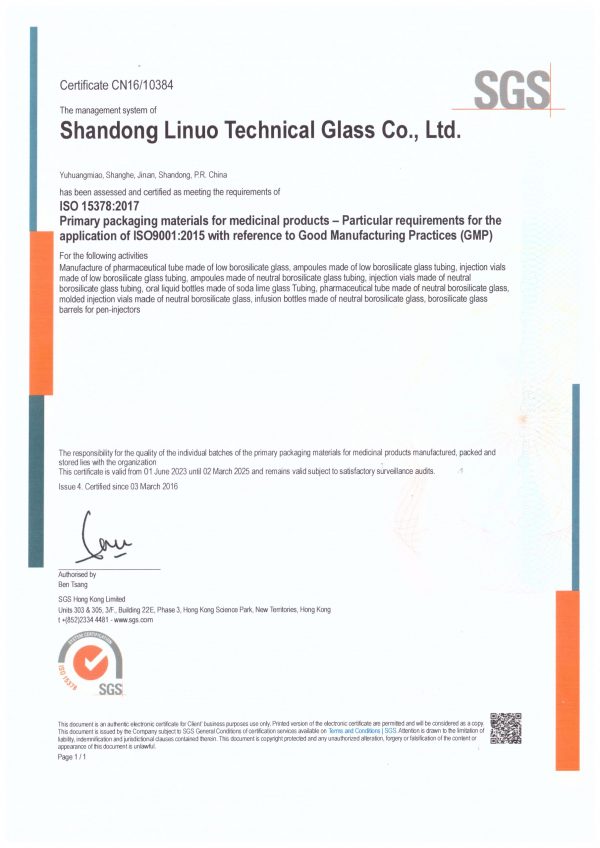
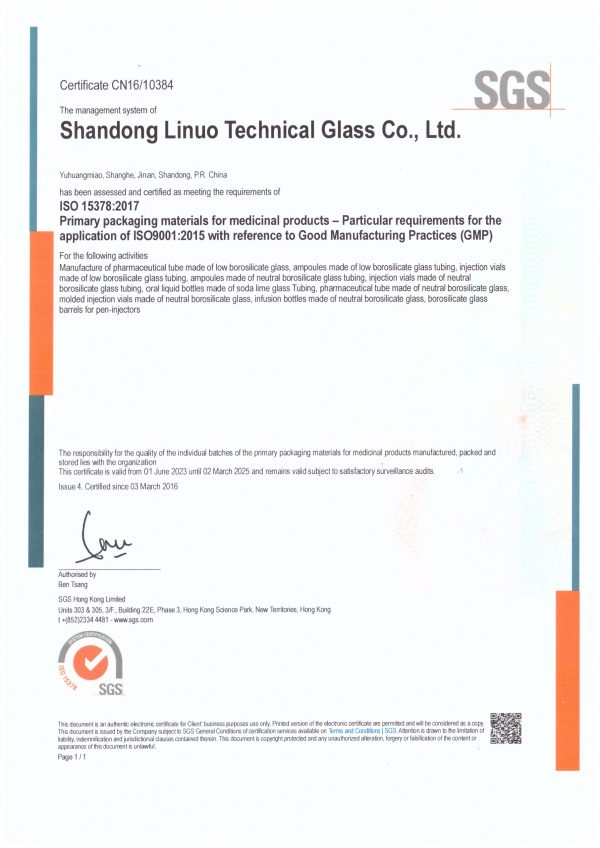
I’ve seen these rules save a client in 2020 from a costly recall; I’ve also seen them ignored—and then we paid for it. So, when you weigh price versus risk, remember that the cheapest vial can become the costliest line item later. For practical sourcing and tooling, I recommend checking partners like LINUO for consistent tubing and verified process records. That’s my take—direct, simple, and based on more than 15 years in B2B supply chain work.